
Blog
Use Cases

What HR Teams Can Learn from the AI Checks at MAD!
Since July, the Military Counter-Intelligence Service (MAD) has been using software to screen Bundeswehr applicants for loyalty to the Constitution. Whereas employees used to have to manually comb through social media channels, forums, and digital traces for months, the system now analyzes publicly available data in just a few days.
What is known within the Bundeswehr by the official name “Assisted Loyalty to the Constitution Screening” illustrates a trend that has long since become increasingly relevant for companies as well: pre-employment screening based on publicly available information (OSINT).
What HR Teams Can Learn from the AI Checks at MAD!
Since July, the Military Counter-Intelligence Service (MAD) has been using software to screen Bundeswehr applicants for loyalty to the Constitution. Whereas employees used to have to manually comb through social media channels, forums, and digital traces for months, the system now analyzes publicly available data in just a few days.
What is known within the Bundeswehr by the official name “Assisted Loyalty to the Constitution Screening” illustrates a trend that has long since become increasingly relevant for companies as well: pre-employment screening based on publicly available information (OSINT).

When the “Open Web” closes down?
Open Source Intelligence (OSINT) is no longer a “nice-to-have”, but a real factor for reliable security decisions. The paradox: the very information sources that used to be considered “public” are becoming increasingly difficult to access. Anyone who still believes that a few search engine queries and social media monitoring are enough will quickly miss the decisive signals.
The good news is that modern OSINT approaches have evolved. They combine classic open web research with hard-to-reach data – and also supplement findings from the dark web within the legally permissible framework. Not to collect “more data for data’s sake”, but to build a consistent picture of the situation from fragmented sources: faster, more comprehensible and relevant for action.
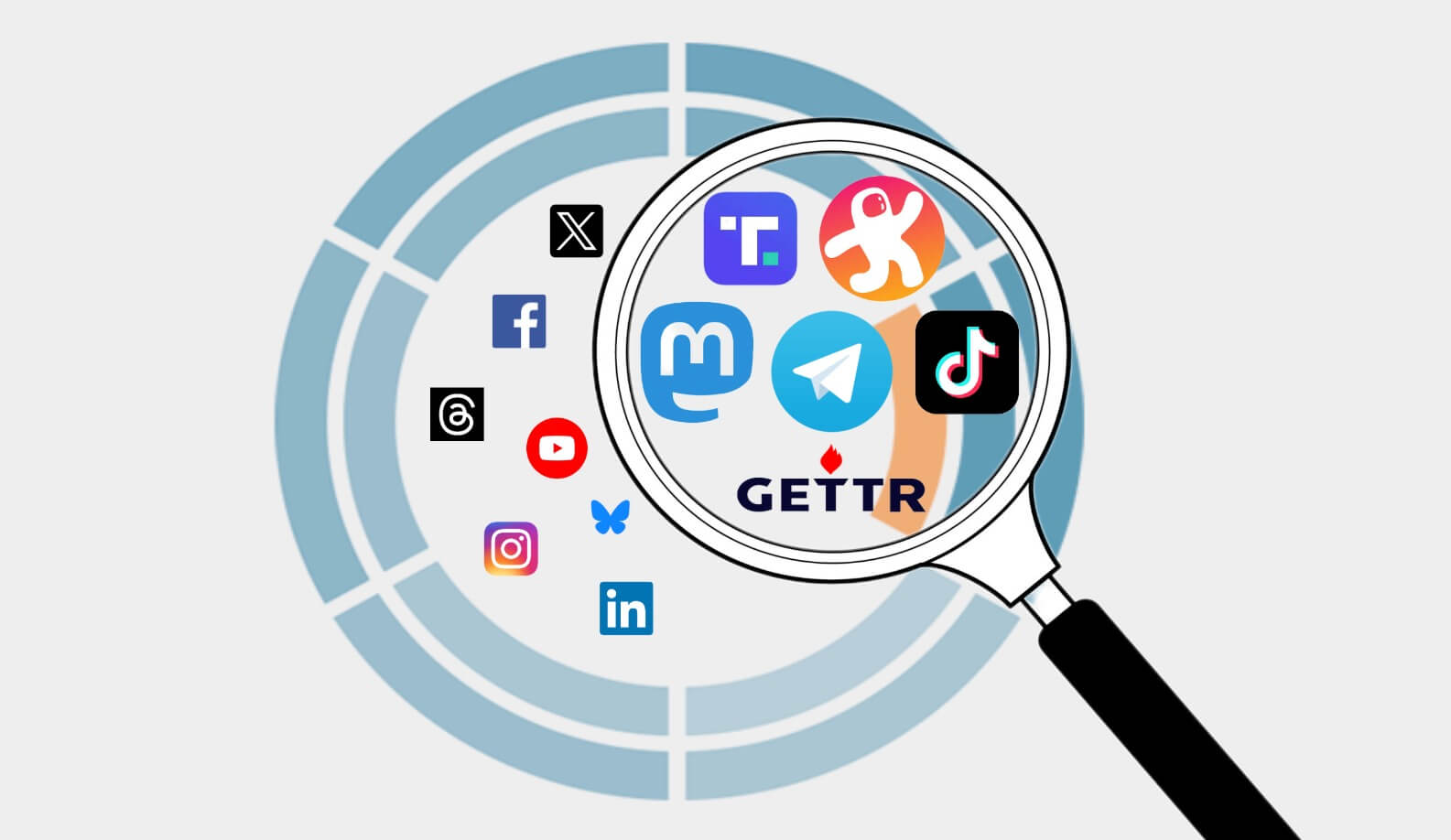
Blind Spots with Consequences!
Why TikTok, Mastodon, Telegram, GETTR, Truth Social, and Odysee belong in monitoring? On these platforms, trends emerge, protests are coordinated, and—in some cases—anti-democratic narratives are spread. Many traditional social listening setups capture them only incompletely: due to missing or restricted APIs (e.g., TikTok), federated or encrypted architectures (Mastodon, Telegram), “alt-tech” ecosystems (GETTR, Truth Social), or because content migrates to alternative video platforms like Odysee in response to sanctions and geoblocking. Ignoring them risks strategic blindness.

Media Monitoring in Crisis Zones: How AI and Satellite Technology Ensure a Crucial Information Advantage
The world is constantly in flux. Attempted coups, changes in government, geopolitical upheavals, and natural disasters are commonplace. Modern monitoring systems effectively capture freely accessible online news and generate an initial digital situational overview. However, as soon as the internet is shut down or social media channels are blocked on the ground, web scrapers alone reach their limits.